
Why do i dream of going back to Taiwan?
Aggiornamento: 9 ago
Davide lived in Taiwan for six years after moving from Italy, first working in local restaurants, then opening his own. Now back in Europe, he tells us his story and his wish to return to Taiwan to start a new business.

Why did you initially move to Taiwan and why do you wish to return?
I lived in Taiwan for five years. My arrival there was not a planned decision: during the Covid-19 pandemic, I was living in Australia, but the situation had become extremely complicated. Since my wife is Taiwanese and we could count on her family’s support, so we decided to move to the island. I arrived in Taiwan almost by chance, without really being prepared and knowing very little about the country.
Although I had already travelled extensively and lived in other countries, my experience in Taiwan was completely different. The first years were very difficult, but over time I learned to adapt to the culture, language, and way of life. After about two years, I finally started to see Taiwan differently, and I fell in love with it.
I discovered an efficient, clean, and well-organized country, with kind and respectful people, fast bureaucracy, and an excellent healthcare system. What I initially saw as coldness, I later understood was often simply reserve and shyness.
Today, I want to return because I feel that Taiwan is the place where I can build my future. I believe it offers greater opportunities to those who want to achieve their goals, start a family, and build something of their own, with a greater sense of stability and security.
I deeply love Italy and I am proud of my origins, but when I think about my future, I feel that Taiwan is the place where I would have greater confidence in building something of my own.
But above all, Taiwan has become part of my life. It is where I met wonderful people who became true friends and, to me, part of my family.
That is why I want to return: because I did not simply find a country where I could live, but a place where I truly feel I belong.
In 2022 you opened in New Taipei the restaurant “Alassio”. In 2026 you decided to close it, why?
Opening the Alassio restaurant was an idea that my wife and I developed together. At that time, we were struggling to find a job that truly satisfied us, and knowing that Taiwan offers opportunities to people who are willing to work hard and prove themselves, we decided to take a chance.
We did not open the restaurant with the main goal of making a lot of money or becoming rich. Our dream was much simpler: to build something of our own that would allow us to make a living, express our skills, and create a future together. For us, success was not only about money, but also about the satisfaction of making our customers happy, seeing them come back because they enjoyed being with us, and knowing that we had created something people truly appreciated.

I already had 23 years of experience working in the kitchens of luxury hotels and high-level restaurants, while my wife had experience in restaurant service. However, managing your own business, even a small one, is completely different from being an employee, and for us it was a completely new world.
The beginning was difficult, but over time it also brought us great satisfaction. The restaurant became well known, and we built a special relationship with many loyal customers who came back regularly and eventually became almost like part of our family. Our restaurant became quite successful, and over the years we were also visited by influencers, journalists, YouTube channels, and television programs.
Unfortunately, during all five years of operation, there was one problem we were never able to fully solve: finding qualified staff.
I was never able to find a stable assistant chef, and we often found service staff with little or no experience. We were not a training school: we needed people with at least some basic skills who could genuinely help us with the daily running of the restaurant. Even though we offered reliable salaries above the average, as well as tips, we continued to struggle to find suitable staff.
Fortunately, thanks to my friendship with five Italian priests who were teaching at Fu Jen University, some Taiwanese students started working with us part-time. Although they had no experience at the beginning, we decided to give them an opportunity and taught them everything from scratch. Over time, they became excellent colleagues, then friends, and finally people whom I consider almost like my own children.

Unfortunately, as students, they eventually had to focus on university, their studies, or military service. When we could no longer replace them, my wife and I had to increase our personal commitment to the restaurant more and more.
For five years, I was practically alone in the kitchen. My passion and the satisfaction of our customers gave me the strength to continue, but eventually the tiredness and stress started to affect our private life and our relationship as a couple. In the end, with great difficulty, we had to make the decision to close.
It is important to point out that the staffing problem was not specific to our restaurant. I am still in contact with many restaurant owners and chefs in different countries, and they all tell me the same story: finding qualified staff has become one of the biggest challenges facing the restaurant industry worldwide. I see the same problem today in France, where I work, even despite good salaries and working conditions.
After deciding to close, I initially thought that my future would be in Europe. I returned to Italy while my wife stayed in Taiwan to complete the final closure of the restaurant. Our plan was that, once everything was finished, she would join me in Italy and we would start a new life together.
After several months in Italy I realised that, although I really appreciate my roots, it is Taiwan where I truly want to build our future; its stability, security, and opportunities make it the ideal place to reunite with my wife and start the next chapter of our life together.
What will you do once you are back? Do you have any future projects or business ideas?
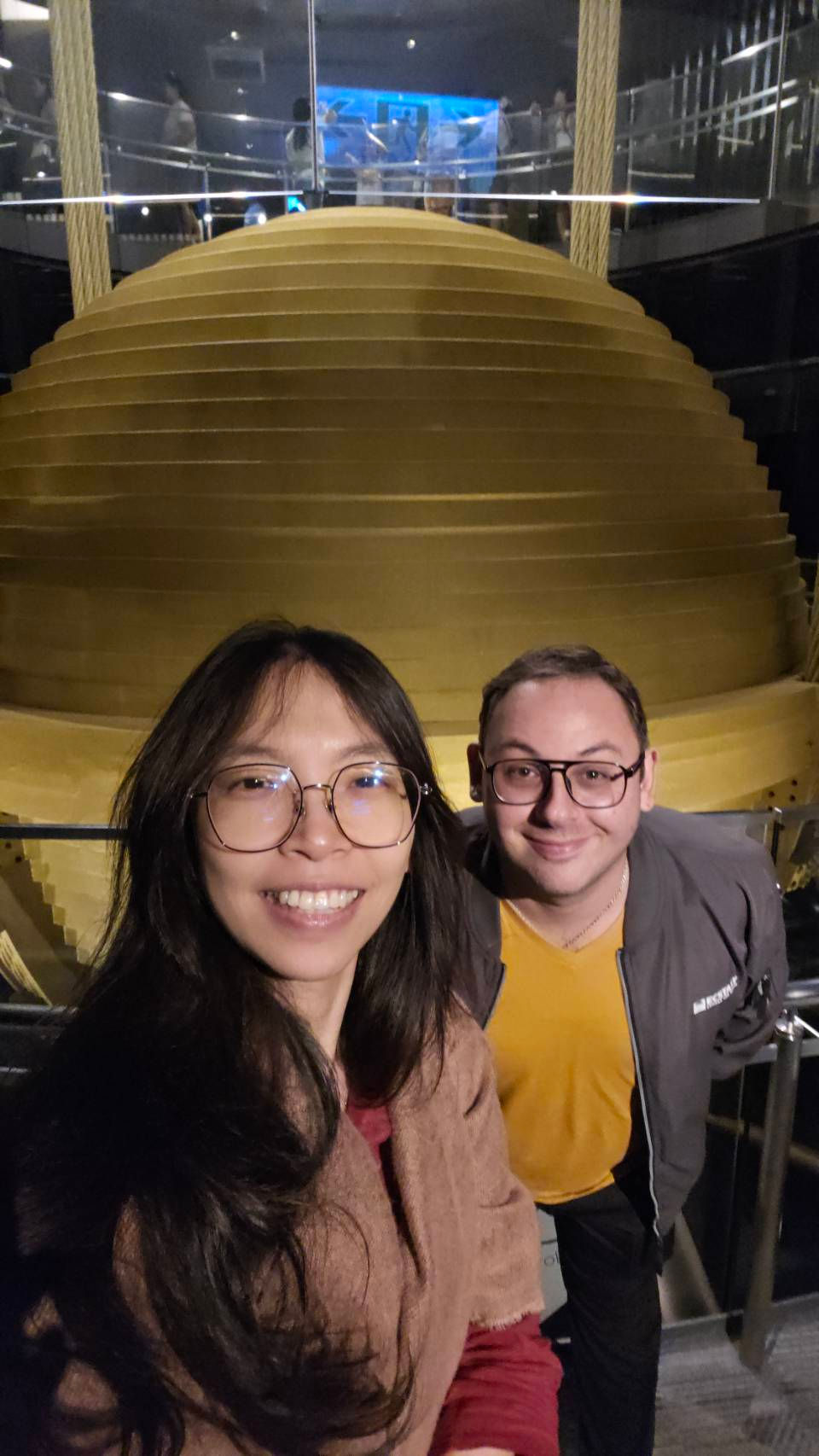
The first thing I want to do when I return to Taiwan is hug my wife, her family, and my boys again. By “my boys,” I mean my former restaurant employees, who today I consider like family. I miss the everyday life we shared, the food, the culture, and all those little things that, after five years, made Taiwan feel like home.
I also want to continue studying Chinese, because I believe that knowing the language is essential to understanding Taiwanese culture even better and building my future in Taiwan.
Professionally, I am open to different possibilities. I could continue working as a chef, offer my experience as a consultant, or work as a private chef. But in recent years, I have developed another passion: sharing my knowledge and helping young people grow.
Through my relationship with my staff, I discovered how much satisfaction I get from seeing someone arrive with no experience, learn, improve, and gain confidence in themselves.

This is where an idea I would like to develop in Taiwan came from: creating courses in Everyday Independent Living Skills, especially to help young people learn how to live independently.
The idea also comes from my own personal experience. Because of some family difficulties, I had to learn from a young age how to take care of myself. I learned how to cook, do laundry, wash and iron clothes, sew, and manage a home. Only later did I realize how much these skills had given me independence, confidence, and the ability to adapt to life.
During the years of the restaurant, one of my waitresses also told me how worried she was about moving to Australia without knowing how to cook or manage basic everyday activities. Later, while speaking with some university professors, I discovered that many students who move away from their families or go abroad struggle with skills that we often take for granted.
This gave me the idea of teaching young people how to become more independent: how to cook simple and healthy meals, shop intelligently and reduce waste, do laundry and iron, make basic sewing repairs, clean and organize a home, and manage everyday responsibilities.
I imagine developing the project in three levels:
Level 1 – Basic Independent Living Skills: for students and young people who are starting to live on their own and want to learn the essential skills needed to manage everyday life.
Level 2 – Intermediate Skills and Cooking: for those who want to improve their skills, learning how to prepare complete dinners, menus, desserts, and other cooking techniques according to their personal interests.
Level 3 – Professional Chef Training: for those who want to turn cooking into a profession and build a strong foundation for working in the restaurant industry internationally.
Another advantage is that we still have a large amount of equipment from our former restaurant stored in our warehouse in Taipei. This includes tables, chairs, ovens, stoves, boilers, ventilation equipment, and various kitchen and dining-room equipment. Much of this could potentially be reused for the project, making it easier to create a practical environment where students can learn by actually doing things.
The project is still an idea that needs to be developed and turned into something concrete, but I already have many more details and I would be happy to collaborate with people, schools, universities, or organizations interested in helping me make it a reality.

I am also considering other possibilities, such as opening a small food shop or food business that could be managed mainly by myself or with one or two people at most. I would also love to promote Taiwan, perhaps by organizing travel groups from Italy and helping people discover a wonderful country that, is still vastly underrated as a tourist destination. However, my biggest dream is still to one day reopen the Alassio restaurant, or create a new restaurant with the same spirit and philosophy. Even today, some of our former customers still contact us and tell us how much they miss us. This makes us realize how special the restaurant and the relationship we built with our customers truly were.
Of course, today I am much more aware of the difficulties involved in managing staff. So, if one day I reopen Alassio or create another restaurant, I would want to do it with a more sustainable model that takes into account the reality of the industry today.
Whatever form it takes, my desire is to return to Taiwan and give this country everything I have learned: my experience, my work, and my passion. Taiwan has given me so much, and I feel that it is where I can build my future. I simply want to find the best way to give something back to a country that I now consider my second home.

This looks very interesting. If anybody is interested in investing in your project, how can they contact you?
Anyone interested in learning more about the project or discussing a possible collaboration is welcome to contact me through my personal Facebook profile, Davide Cassinari.
My main goal is to return to Taiwan and rebuild my future there. While developing a three-level course project is one of my key focus areas, I am fully open to exploring other professional opportunities where my background—in hospitality or beyond—can add value. I strong believer in the power of collaboration, so I would be delighted to connect with anyone interested in sharing ideas, expertise, or potential partnerships.


Commenti